






The Tools Have Changed, But the Architect Remains
Having worked in the architecture industry for more than 30 years, I have had the privilege of witnessing one of the most remarkable periods of technological change in professional practice. Looking back to where I started and comparing it to where we are today, it is almost difficult to believe that it is the same profession.
When I first entered the industry, a drawing board was the centrepiece of every office. We worked with pencils, technical pens, set squares and rolls and sheets of tracing paper. Drawings were produced by hand, line by line, detail by detail. Mistakes were corrected with razor blades carefully scraping ink from film, hoping not to damage the drawing beneath. There was a craft to the process, a discipline that required patience, accuracy and skill.
Communication was equally different. Letters were typed and posted. Drawings were physically delivered. The arrival of the fax machine felt revolutionary, allowing information to travel in minutes rather than days. It is amusing now to think how exciting that felt at the time.
Then came computers.
The introduction of CAD and AutoCAD transformed the profession. Suddenly, drawings could be amended without redrawing entire sheets. Information could be stored, copied and shared more efficiently. Productivity increased, accuracy improved and the possibilities for design development expanded dramatically.
As technology continued to advance, so did the pace of practice. Email replaced letters. Mobile phones replaced the need to wait until returning to the office. Text messages enabled instant communication. Laptops allowed architects to work from construction sites, client meetings and virtually anywhere in the world.
The profession became faster, more connected and increasingly collaborative.
Yet despite all these innovations, one thing became increasingly clear: technology was never the architect.
The software could draw lines, but it could not create vision.
The computer could generate information, but it could not build trust.
The mobile phone could connect people, but it could not replace relationships.
Throughout every technological shift, the true role of the architect remained remarkably consistent. We are creators, communicators and problem solvers. We are the people who bring together clients, consultants, contractors and stakeholders around a shared vision. We listen, interpret, challenge and inspire.

Architecture has always been about people.
The best architects are not necessarily those who master the latest software first. They are the ones who understand their clients' aspirations, who can communicate ideas clearly, who can lead teams effectively and who can navigate the complexities of a project with confidence and empathy.
This becomes even more important within the super-prime residential sector in which we operate. Our clients are not simply commissioning a building; they are entrusting us with highly personal ambitions, significant investments and, in many cases, homes that will be enjoyed by generations to come. The relationships we build with our clients are therefore fundamental to the success of every project. Trust is earned through experience, communication, consistency and the ability to guide clients through complex decisions with confidence. While technology can help us work more efficiently, it can never replace the reassurance that comes from genuine human connection and expert guidance. In many ways, the more advanced our tools become, the more valuable those personal relationships become.
Today, we stand on the threshold of another significant transformation: artificial intelligence.
AI is already beginning to reshape aspects of design, administration, visualisation and project delivery. Tasks that once took hours can now be completed in minutes. Information can be analysed at unprecedented speed. New creative possibilities are emerging almost daily.
As with every major innovation before it, there are questions, challenges and opportunities. Some fear what AI may replace, but history teaches us something important. When CAD arrived, architects did not disappear. When email arrived, communication did not become less important. When mobile technology emerged, leadership did not become obsolete.
Instead, architects adapted.
The tools evolved, and so did we.
What excites me most about AI is not the idea of replacement, it is the opportunity for amplification.
I see AI as a powerful extension of human creativity, enabling us to stretch further than ever before in our ability to imagine, test, refine and deliver extraordinary outcomes. It gives us the potential to unlock new levels of innovation, explore possibilities at unprecedented speed and focus more of our energy on the strategic and creative thinking that truly adds value.
AI will undoubtedly become another powerful tool within our professional toolbox. It will help us work smarter, process information faster and explore ideas more efficiently. But just like the drawing board, the technical pen, the fax machine, the CAD workstation and the smartphone, it remains exactly that: a tool.
What excites me most is that AI has the potential to strengthen, rather than diminish, the human side of architecture. By helping us automate repetitive tasks, analyse information more effectively and accelerate certain processes, it allows us to devote more time to the aspects of our profession that matter most. It gives us greater capacity to engage with clients, understand their aspirations, communicate ideas and provide the strategic guidance that only experience can offer. The relationships we develop with our clients will always remain at the heart of what we do, and AI should be viewed as an enhancement to those relationships rather than a replacement for them.

The real value of architecture has never resided in the tools themselves. It resides in the people who use them.
I am also incredibly fortunate to work alongside some of the most talented people in the industry. Across Rigby & Rigby and Allect, we have exceptional architects, interior and creative designers, project managers, technical and delivery specialists and innovators who continually challenge themselves to deliver outstanding outcomes for our clients. Their creativity, expertise and commitment to excellence are what truly drive our success. Technology may continue to evolve, but it is the talent, judgement and dedication of our people that transforms ideas into reality.
And that is why I am genuinely excited about what lies ahead. Not because AI will replace architects, but because it will empower us to achieve things that once seemed unimaginable. It will help us deliver the unbelievable, create the incredible and bring the future of design closer than ever before. The combination of human imagination, experience and empathy, enhanced by the capabilities of AI, has the potential to redefine what is possible in our profession.
After more than three decades in this profession, what continues to inspire me most is not the technology. It is the privilege of helping clients turn aspirations into reality. It is the excitement of solving complex challenges. It is the responsibility of leading projects and bringing talented teams together. It is the satisfaction of creating places that improve people's lives.
The tools in our toolbox have changed dramatically over the last 30 years. Some have disappeared entirely. Others would have seemed unimaginable when I first sat down at a drawing board with a pencil in hand.
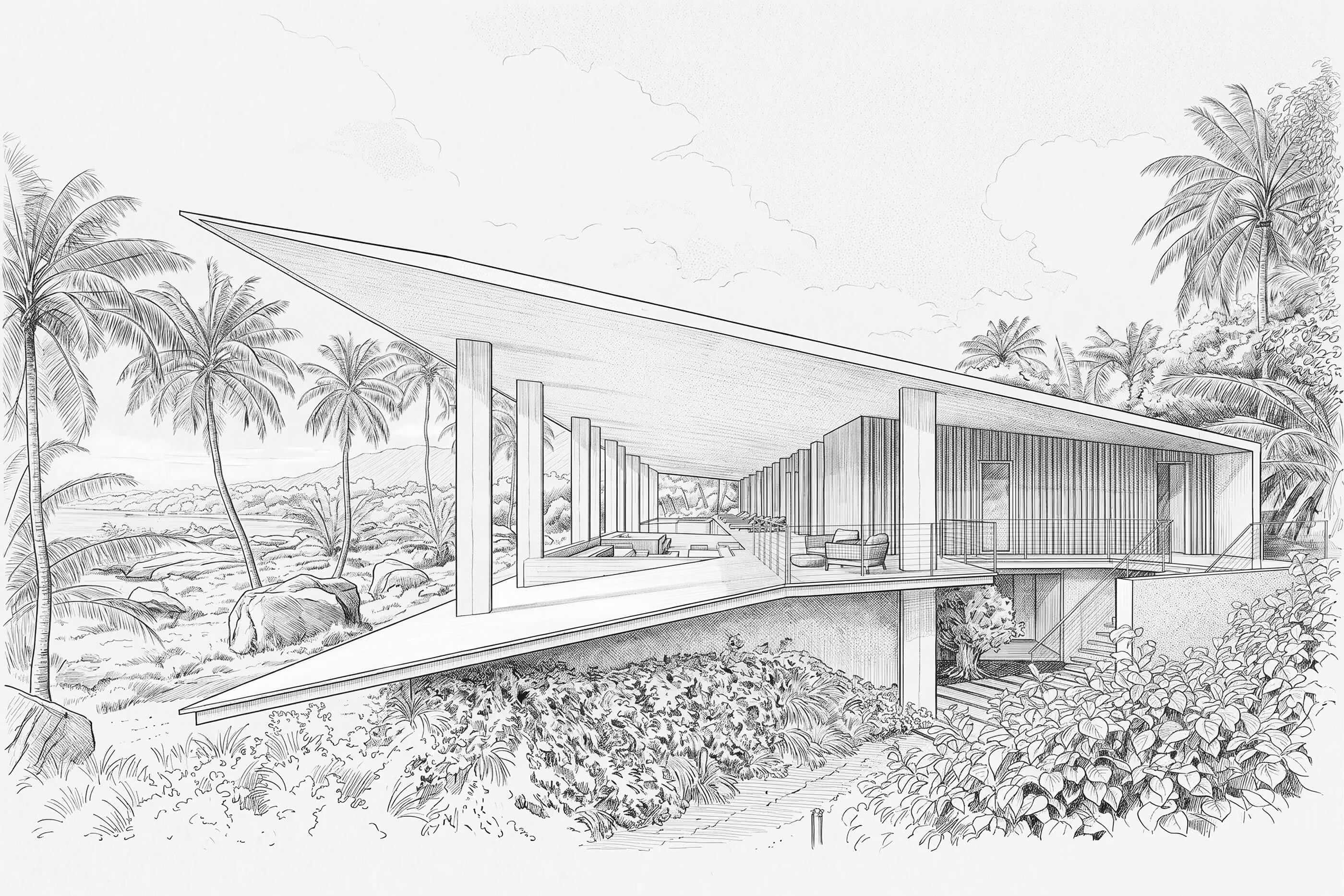
But the essence of architecture remains unchanged.
Creativity still matters.
Communication still matters.
Leadership still matters.
Most importantly, human connection still matters.
Because regardless of how advanced our technology becomes, there will always be something extraordinary about sitting across from a client, understanding their ambitions, and helping them see a future that does not yet exist. That ability to inspire confidence, communicate ideas and create meaningful places is what makes architecture such a remarkable profession and why, after all these years, I remain as passionate about it as ever.
As we embrace this next chapter of technological evolution, I would encourage you to look at the work we are doing at Rigby & Rigby and Allect. Through our AI Lab and MAKE Lab initiatives, we are actively exploring how artificial intelligence, emerging technologies and advanced digital processes can enhance creativity, improve delivery and unlock new possibilities for our clients.
The work being undertaken by our AI Lab is particularly exciting. Our teams are not simply observing developments in artificial intelligence; they are actively helping to shape how these technologies can be applied within architecture, design and project delivery. Through ongoing research, experimentation and implementation, they are developing innovative ways to harness the power of AI across our processes, improving efficiency, enhancing creativity and enabling smarter decision-making throughout the project lifecycle.
I would encourage anyone interested in this journey to read the AI Lab article published on our website on 2 February 2026, along with the ongoing series of blogs and development updates that continue to showcase the remarkable work being undertaken by the team. Their progress demonstrates not only the pace of technological advancement but also the opportunities available when innovation is embraced with purpose and creativity.
We are passionate about innovation and believe it is not something to observe from the sidelines; it is something to help shape. By continually investing in new ideas, technologies and ways of working, we remain committed to pushing boundaries, exploring what comes next and delivering ever greater value for our clients.
Perhaps most importantly, I believe we should approach this new era with excitement rather than fear. The architecture profession has changed dramatically over the last thirty years. We have adapted to the arrival of CAD, digital communication, mobile technology and countless other innovations that transformed the way we work. Each time, there were questions about what the future might hold. Each time, the profession evolved and emerged stronger.
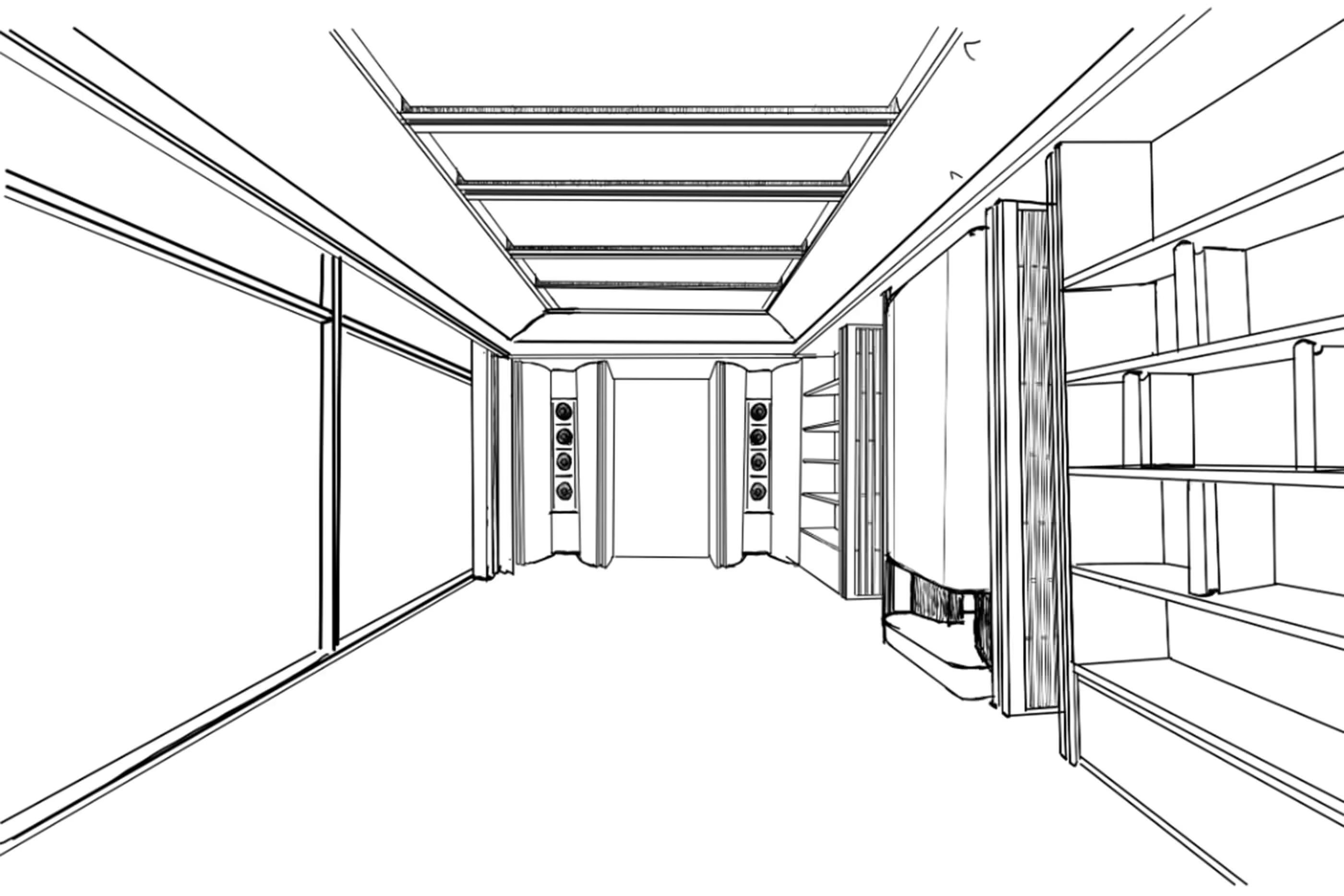
Artificial intelligence is no different.
The tools have changed, and they will continue to change.
But the architect remains.
The ability to build trust remains.
The ability to lead remains.
The ability to create remains.
And the ability to form meaningful relationships with clients, understand their aspirations and guide them towards extraordinary outcomes remains as important as ever.
That is why I believe the future is so exciting. Not because technology will replace the architect, but because it will empower talented people to achieve even more than they ever could before.
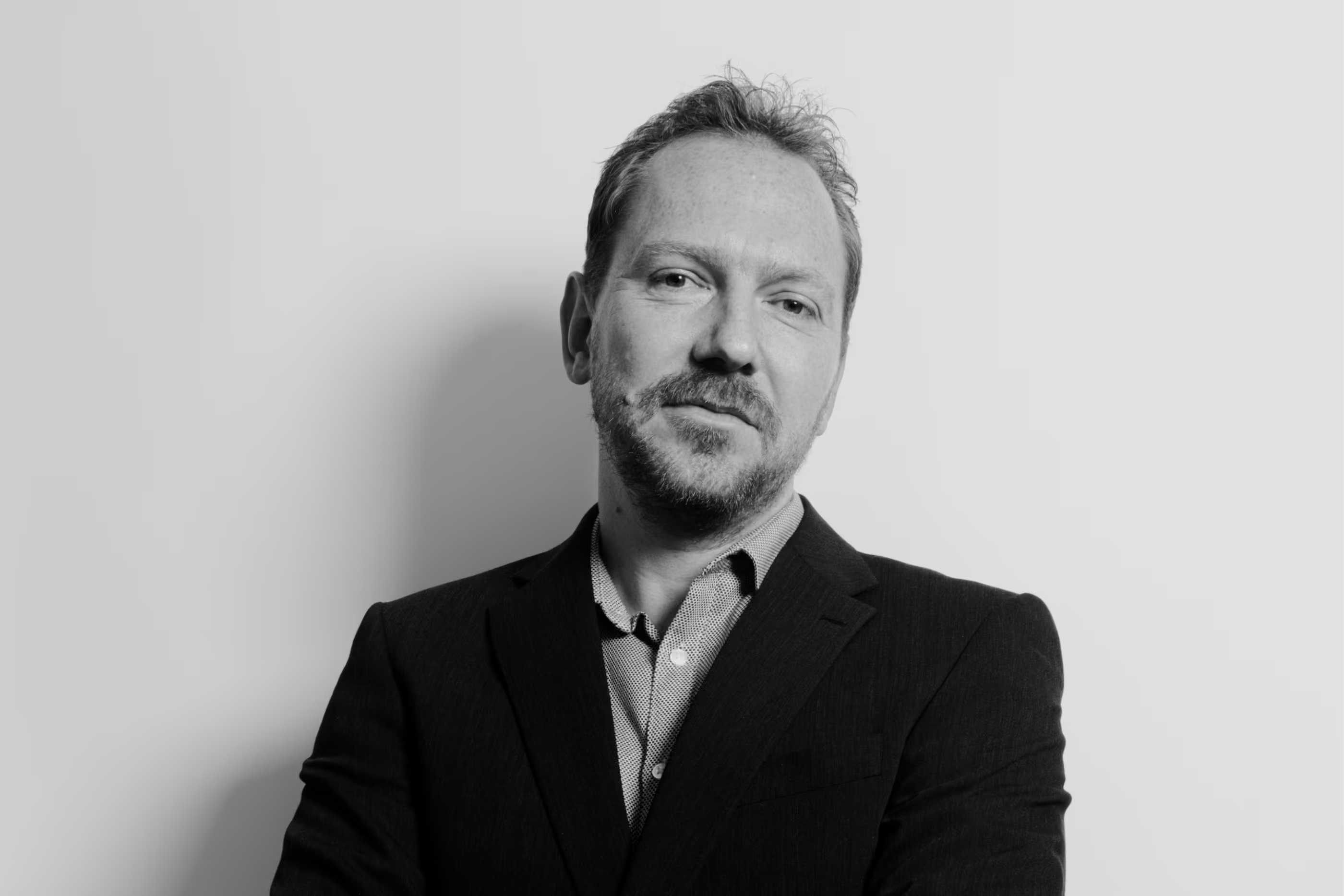
Written by Mark Cowley, Studio Director



.jpg)

.jpg)


