







The Art of Timber Joinery
Conventional Joinery
Joinery is everywhere we look; in doors and wall panelling, kitchens and fitted wardrobes. The vast majority of what we see in day-to-day life is probably mass produced. Templates which are duplicated on a large scale, so they can be rolled out, to provide affordable functionality. In the same way that everything we use has been designed to fulfil a purpose, for example a cup that holds a drink or a door handle that opens a door; we tend to only stop to admire something, when it is designed well. Basic joinery is something that is part of the background, which doesn’t receive much attention. However when we are in the presence of a piece which is thoughtfully designed, we are able to appreciate the journey that it came on to materialise.
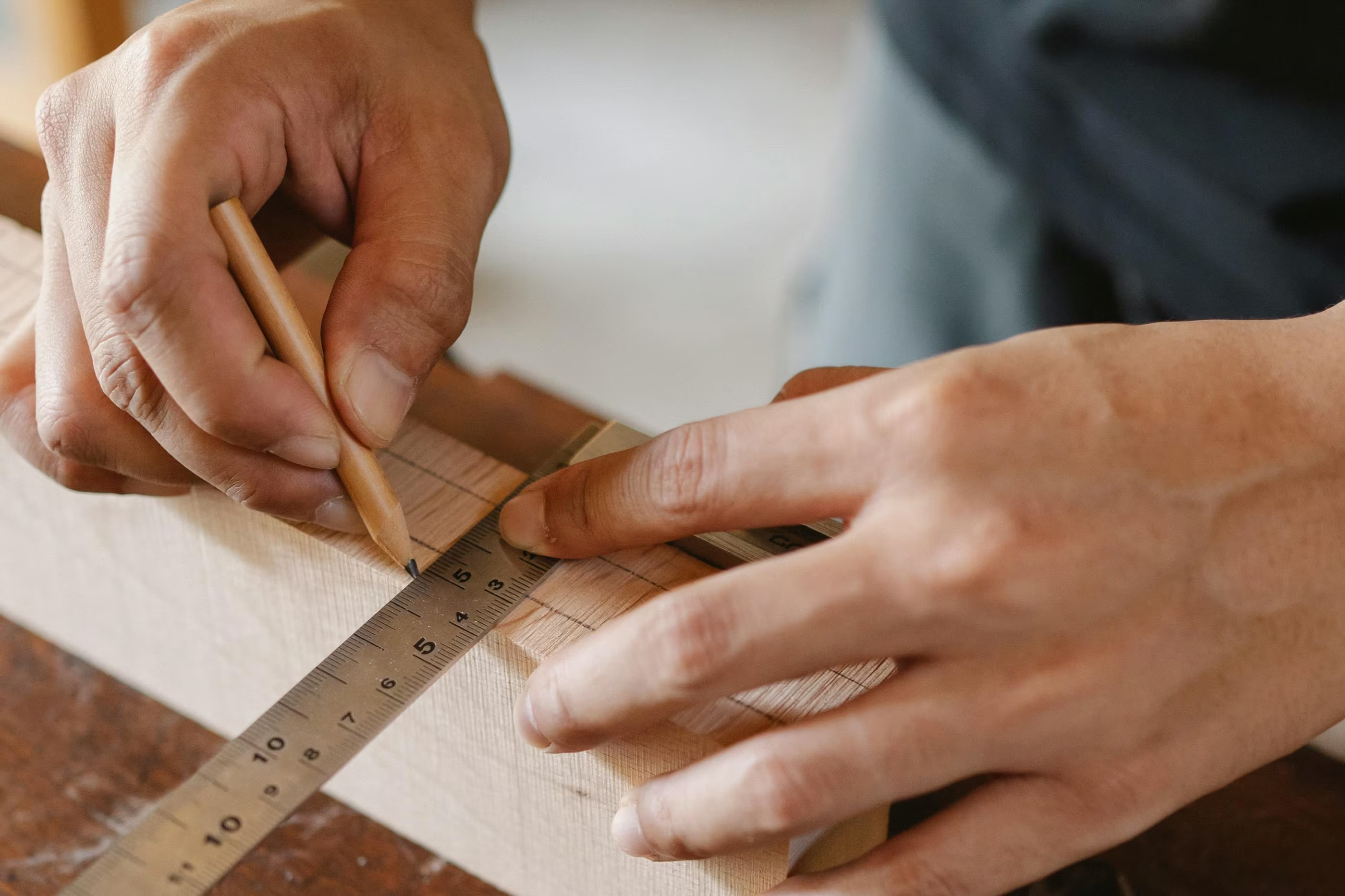
Joinery is formed by connecting two or more pieces of structure together, and this is achieved by using different techniques; with the choice of method determined by the strength, complexity and aesthetic of the finished product. Generally speaking, butt joints and mitred joints are the standard choice, as they are not overly complicated and are cost-effective. These joints are then required to be fastened with adhesive and fixings, such as screws, nails and bolts.
When time is not a major constraint, and we are not restricted to delivering a piece of joinery or furniture within a tight schedule; we can be afforded the time to look beyond conventional design. Having the luxury of applying more intricate methods to the joinery process, will create more purposeful and beautiful results.
Screwless Joinery
“Perfection is achieved, not when there is nothing more to add, but when there is nothing left to take away.”
Antoine de Saint-Exupéry, Airman’s Odyssey
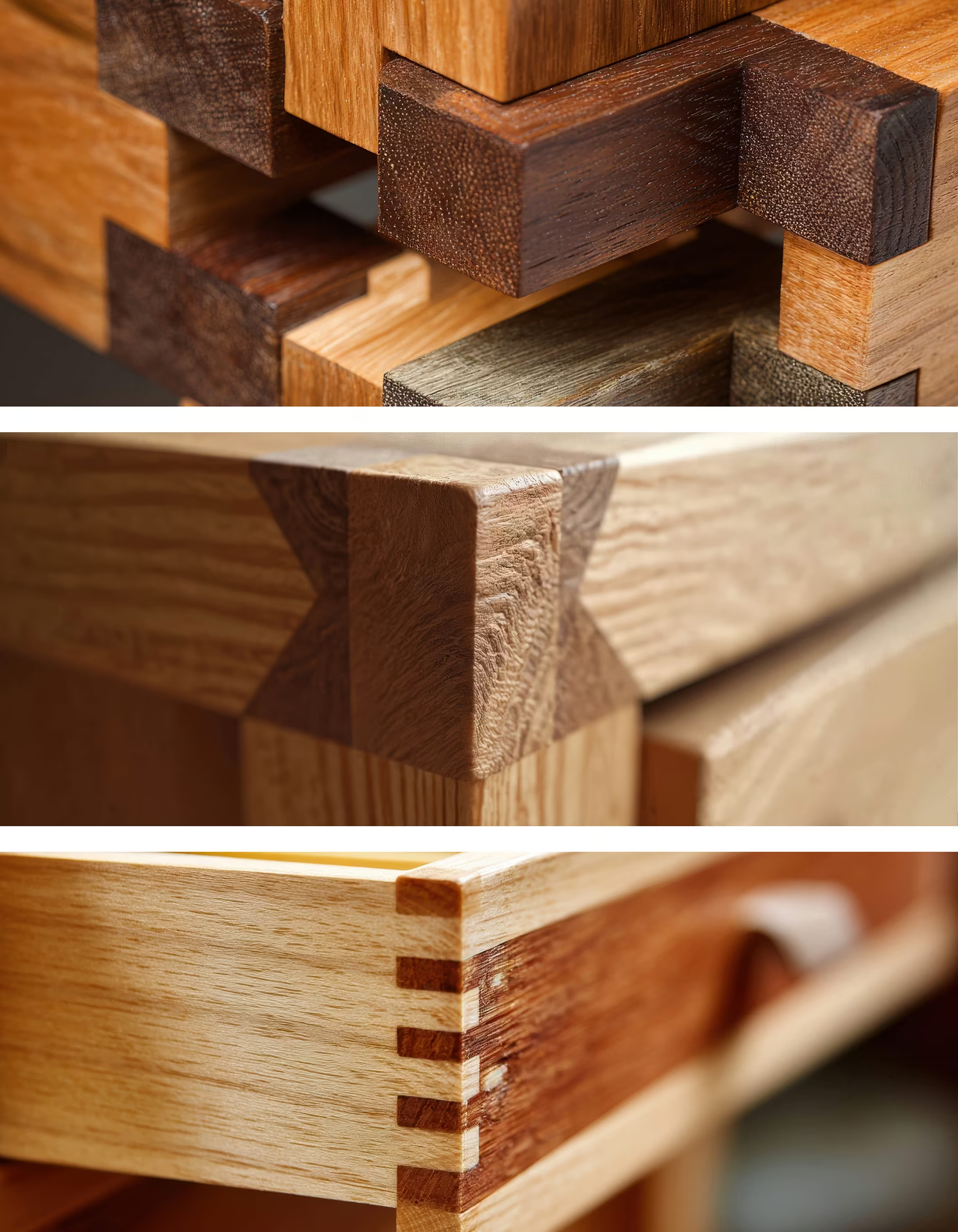
Even with the most innovative and aesthetically pleasing nuts and bolts in different finishes, there’s nothing quite like the sight of something which appears to be held together without fixings. However removing the need of screws is not just to be praised as an attractive design choice, but also to commend the epitome of true craftmanship. Traditional joints such as dovetails and, mortise and tenon, embrace the precision of connecting timber together; allowing movement in temperature changes, whilst preserving it’s structural integrity.
Metal fixings can provide multiple solutions, however they can also cause problems. Timber naturally expands and contracts during the change of seasons and with metal fixings creating stiff points; this fights against timbers’ inherent properties. Which in time can ultimately lead to loose joints and splitting. When a screw joint fails, the surrounding area is damaged, so it may not be feasible to repair. Which is one of the issues we have with consumerism - having to replace things, rather than fixing what we already have.
If care is taken, traditional joints can be disassembled. Although the process of designing and making a piece of screwless joinery is initially seen as time consuming and not as cost effective as conventional joinery. Fundamentally what the end user is receiving is something that is more sustainable, as it will have increased longevity and more scope to be repaired if required in the future. Being able to invest in thoughtful luxury not only produces heirlooms which stand the test of time, but it also supports true craftmanship, which will nurture the next generation to appreciate the importance of continuing and adapting traditional methods.
Sunmao 榫卯
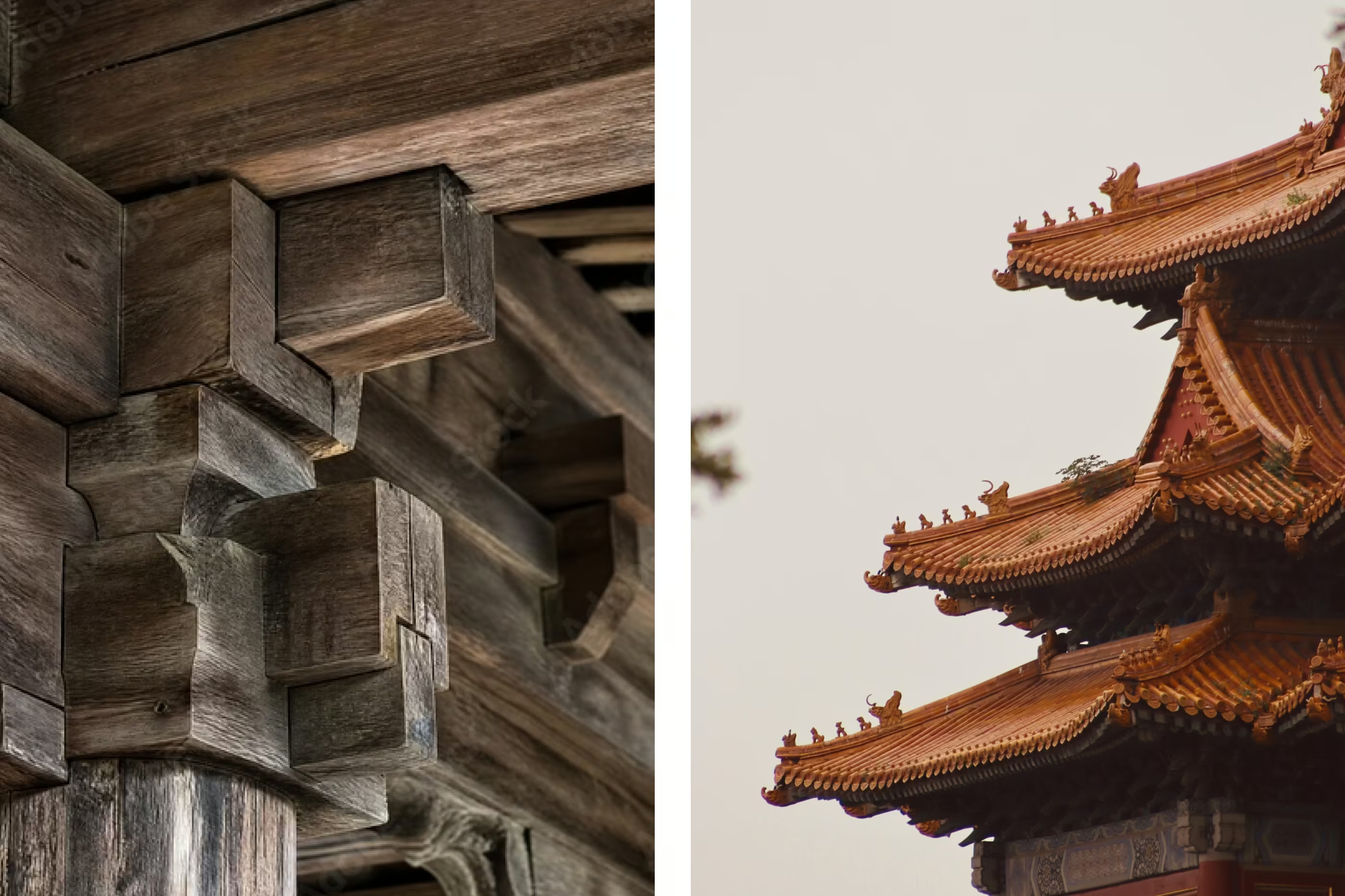
Stepping back over 7,000 years, long before modern technology and CNC machines, China invented Sunmao. Also known as mortise and tenon joinery, this technique was officially recognised in 2009 by UNESCO as an Intangible Cultural Heritage of Humanity. An art form which has truly stood the test of time.
An ancient technique interlocking convex sun (male) and concave mao (female) timber elements, without any fixings, Sunmao created structures which exhibit both strength and flexibility; with the innovative method withstanding humidity changes and one of the most powerful forces of nature - earthquakes. One of the most well-known examples is The Forbidden City Imperial Palace in Beijing; at over 600 years old, it has survived 200 devasting earthquakes.
Whilst we think about time and cost management of modern day projects; Sunmao also provided efficiency. Designing and making components in advance, so they could be assembled quickly on-site, was a simple solution for logistics; and yet the outcome is ancient architecture which is by far more superior than new futuristic buildings we see today. The sophistication of Sunmao is nothing short of extraordinary. An invention embracing a true ying and yang philosophy of working together, pairing beautiful delicate architecture with a strong core. This evokes a curiosity of what inventions could be made, if we were to put our minds to it. With the resources which we have now, can we create something which is still functioning and relevant in 7,000 years time?






.jpg)


