





The Evolution of AI Art
AI Art in 2026: Creativity, Debate, and Design
Artificial intelligence is reshaping how artists create, how audiences experience art, and how designers integrate visuals into spaces. From immersive installations that dance across building façades to pieces that inhabit screens as living artwork, AI art is more than a trend. But what exactly is it, who’s driving it, and how does it fit into high-end design?
What Is AI Art Today?
AI art covers a wide range of creative practices. At its core, it’s artwork created using machine learning models trained on large image datasets. Tools like Midjourney, Stable Diffusion, and DALL·E generate images from prompts, but the final work is shaped by the artist’s choices: which outputs to keep, how to combine them, and what edits or overlays are applied.
Some artists go further, creating custom models, curated datasets, or immersive installations. Here, AI becomes part of the creative process itself, not just a tool. The work can be static, moving, or interactive, ranging from NFT pieces to large-scale projections.
At Rigby & Rigby, we are exploring this potential further through our very own in-house AI Lab. This space experiments with new technology, systems, and ways of working to evolve both our processes and our projects. For us, it’s about embracing AI and utilising it, rather than remaining static or falling behind, we’d like to turn innovation into tangible, client-facing experiences.
Spotlights: Artists Shaping the Field
Refik Anadol transforms data into immersive environments. Installations such as WDCH Dreams and Archive Dreaming turn architecture into living canvases, where built space becomes an active storyteller rather than a static backdrop.
Mario Klingemann explores generative systems that never settle. Works like Memories of Passersby I continuously produce AI-generated portraits in real time, shifting the focus away from a fixed artwork towards the process of creation itself.
Other notable figures include Sougwen Chung, who merges drawing, performance and robotics in collaborative human–machine systems, and Anna Ridler, who carefully constructs and curates datasets to give conceptual weight and intent to machine learning outputs. Infiniteyay has also carved out a niche in digital collector circles with surreal, highly stylised image worlds.
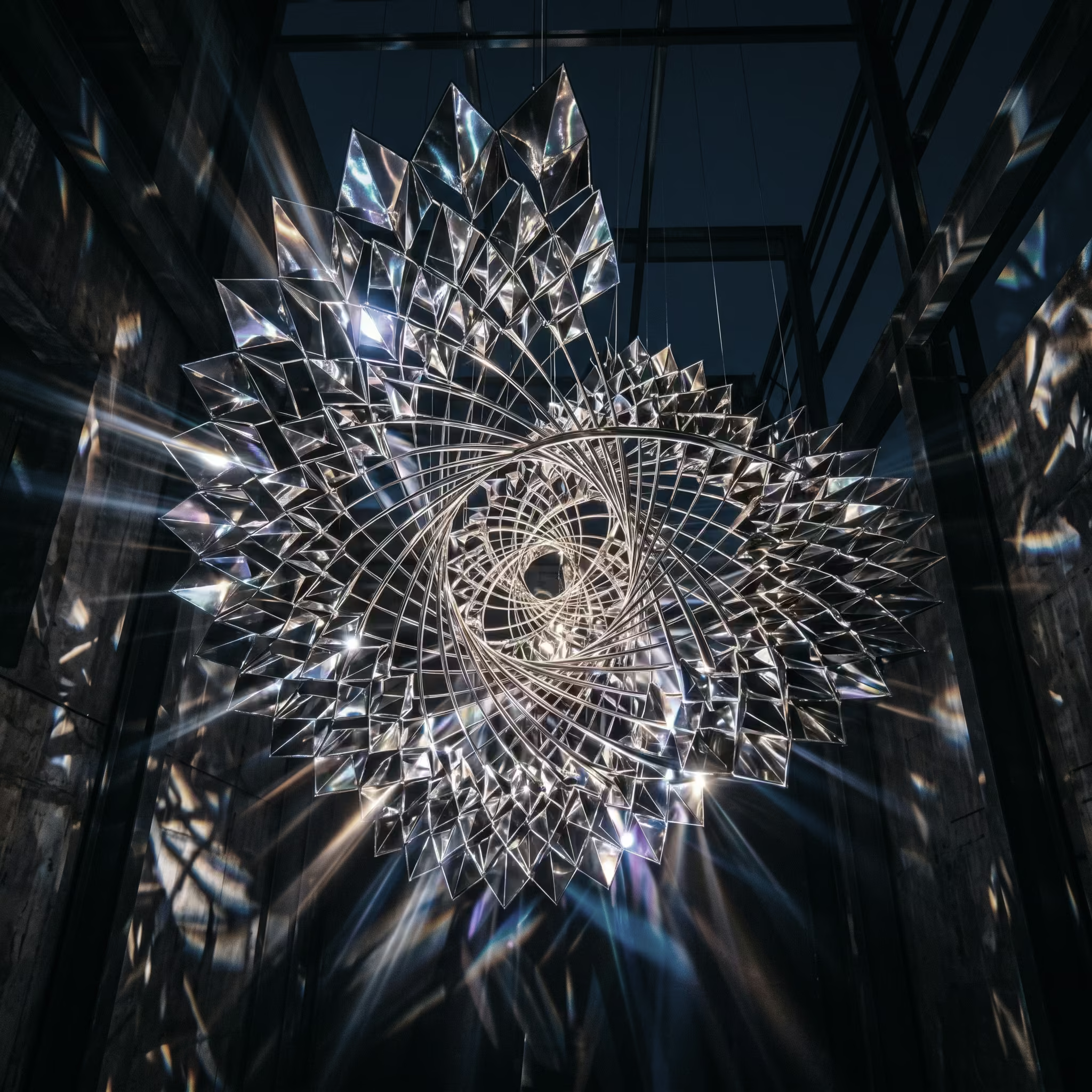
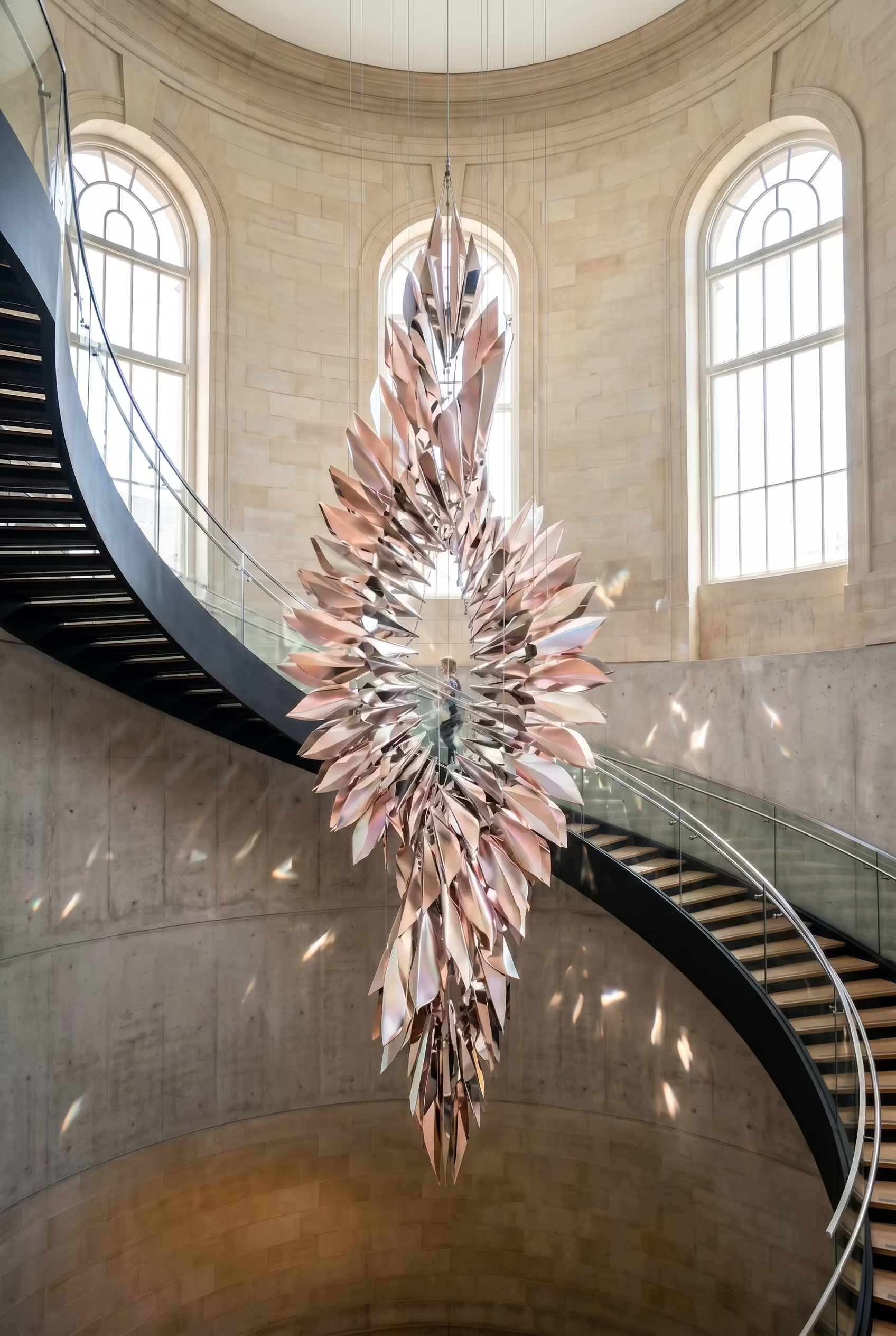
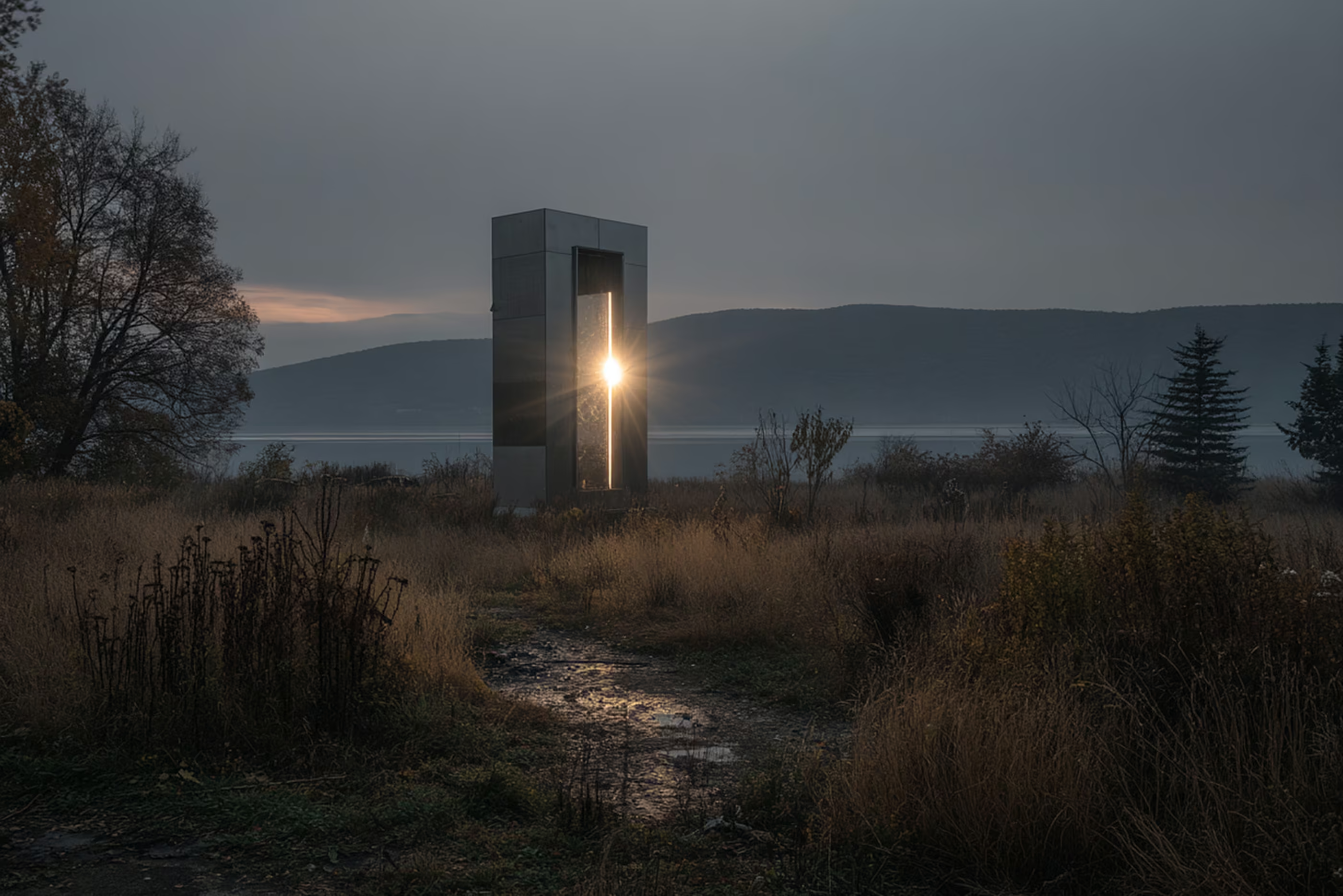
A relevant architectural and spatial reference sits in the work of Atelier I-N-D-J, led by Ian Douglas-Jones. The studio operates across architecture, installation and object design, often blurring the boundaries between disciplines. Their work focuses on how material, light and composition affect perception, creating environments that feel closer to constructed art experiences than conventional interiors. Rather than treating technology as an overlay, it is embedded into the design thinking itself, resulting in spaces and objects that feel intentionally experiential and atmospherically driven.
Together, these practices highlight the breadth of contemporary AI and digital-led work, spanning immersive data environments, generative systems, curated datasets and spatial design that sits between architecture and art.
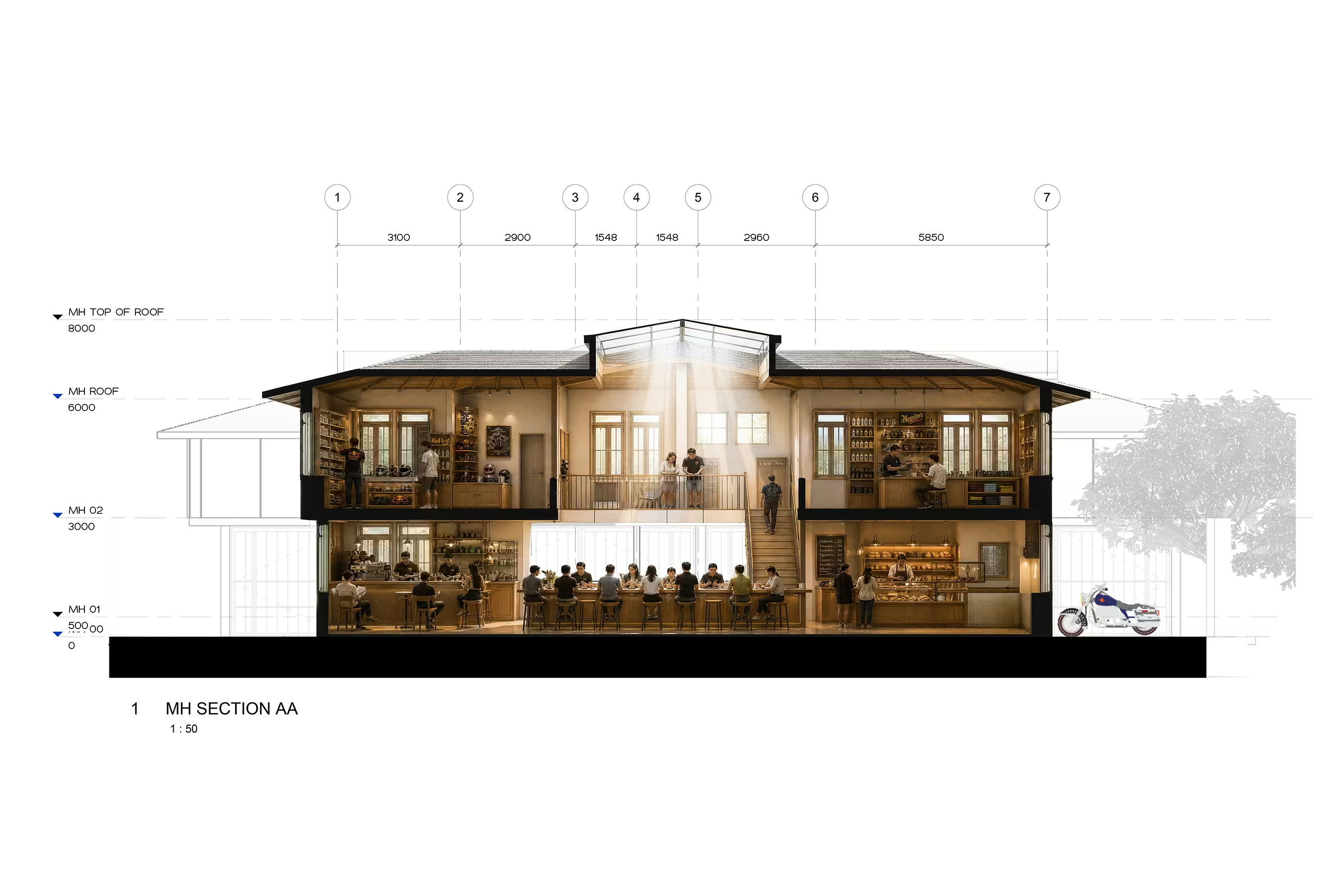
In House Technology
A useful contemporary reference sits within the AI Lab at Rigby & Rigby, where AI is being explored not only as a design tool, but as part of the evolving language of image-making itself.
Rather than positioning AI as a replacement for traditional visualisation or architectural representation, the studio treats it as an additional layer in the ongoing evolution of architectural art. The starting point remains authored design work — grounded in precise 3D modelling, CAD and material intent — but AI is then introduced as a way of shifting the output beyond pure representation into something closer to constructed imagery or digital art.
In this context, the work begins to sit in an interesting grey area. At what point does a visualisation stop being a representation of a building and become an artwork in its own right? When lighting, material and atmosphere are reinterpreted through generative processes, the output can move away from documentation and into something more expressive, where mood and perception become the primary subject.
The AI Lab uses these tools to explore that threshold. Existing design narratives are reworked into multiple visual interpretations, testing not just how a space looks, but how it might be felt. Subtle shifts in tone, composition and light can push a technically accurate interior into something more evocative — closer to digital painting than traditional rendering.
This approach places the studio within the broader evolution of AI art practice, where the boundary between architectural visualisation and artistic output is increasingly blurred. In contrast to fully generative image-making, the emphasis here remains on control, authorship and intent, but with AI acting as a catalyst for expanding visual possibility.
In doing so, the work reflects a wider shift in the discipline: AI is not only changing how images are produced, but also challenging how we define them — as representation, as interpretation, and increasingly, as art.
Why AI Art Resonates
Despite its reproducibility, certain works stand out due to:
- Process and system – the model, dataset, or algorithm behind the work
- Curation and style – a recognisable visual identity
- Limited editions and control – scarcity through curated releases
- Immersive or large-scale formats – installations that engage both the eye and the body
AI can create highly detailed, complex worlds that would take months to realise manually. Its real power lies in amplifying human creativity rather than replacing it.
At Rigby & Rigby, we have put this into practice in our Chelsea Harbour WOWHouse! installation. We have showcased a space using custom screens and interactive lighting, integrated with AI technology. The installation spans five different environments. From snowy Japanese mountains to South East Asian rainforests, with sunlight and ambient light shifting according to each environment, creating a single space with five entirely distinct designs, all empowered by AI.
.avif)
Ethics, Originality, and Impact
AI art prompts questions about authorship and ethics. Critics argue that AI models reuse existing styles or work without consent, while supporters point out that referencing previous work is a long-standing part of art. The shift is in the role of the artist... from maker to director, guiding the AI toward intentional results.
High-quality AI work is thoughtful and deliberate. Generic outputs are easily produced, but immersive installations, curated datasets, and integrated environments show the unique potential.
Applications in High-End Residential Design
AI art opens new possibilities in luxury interiors:
- Feature installations – grand halls, staircases, and double-height spaces
- Ambient environments – evolving visuals for living areas or lounges
- Bespoke commissions – outputs tailored to client imagery, travels, or preferences
- Integrated architecture – LED walls, backlit glass, and digital ceilings that blur the line between art and space
Scale, quality, and careful curation are key... and this is where the power of an experienced architect or designer helps. When done well, AI art can transform interiors into dynamic, responsive environments rather than static decoration.
AI Art in 2026: SUMMARY
AI art is not a fad; it’s an expansion of what’s possible when technology meets creativity. Its strongest expressions — immersive installations, process-driven systems, curated datasets — create experiences that traditional media cannot.
At Rigby & Rigby, we are actively exploring this. Through our AI Lab and projects like WOW!House, we are embracing AI to enhance design, craft experiences, and evolve both the process and the product, bringing clients innovative spaces that respond, change, and inspire.



.jpg)


