

Gaudism Theory & Research
Upon hearing the exciting news that, after 144 years of construction, the Sagrada Família is finally complete, we were inspired to reflect more broadly on Gaudí’s architectural philosophy and its resonance with the distinctive forms of Santorini architecture.
Gaudism
Derived from the structures and designs of Antoni Gaudi, a well known architect, known for La Sagrada Familia and other buildings mostly located in Barcelona. Gaudism explores natural forms, drawing in on curves and scale to produce organic structures.
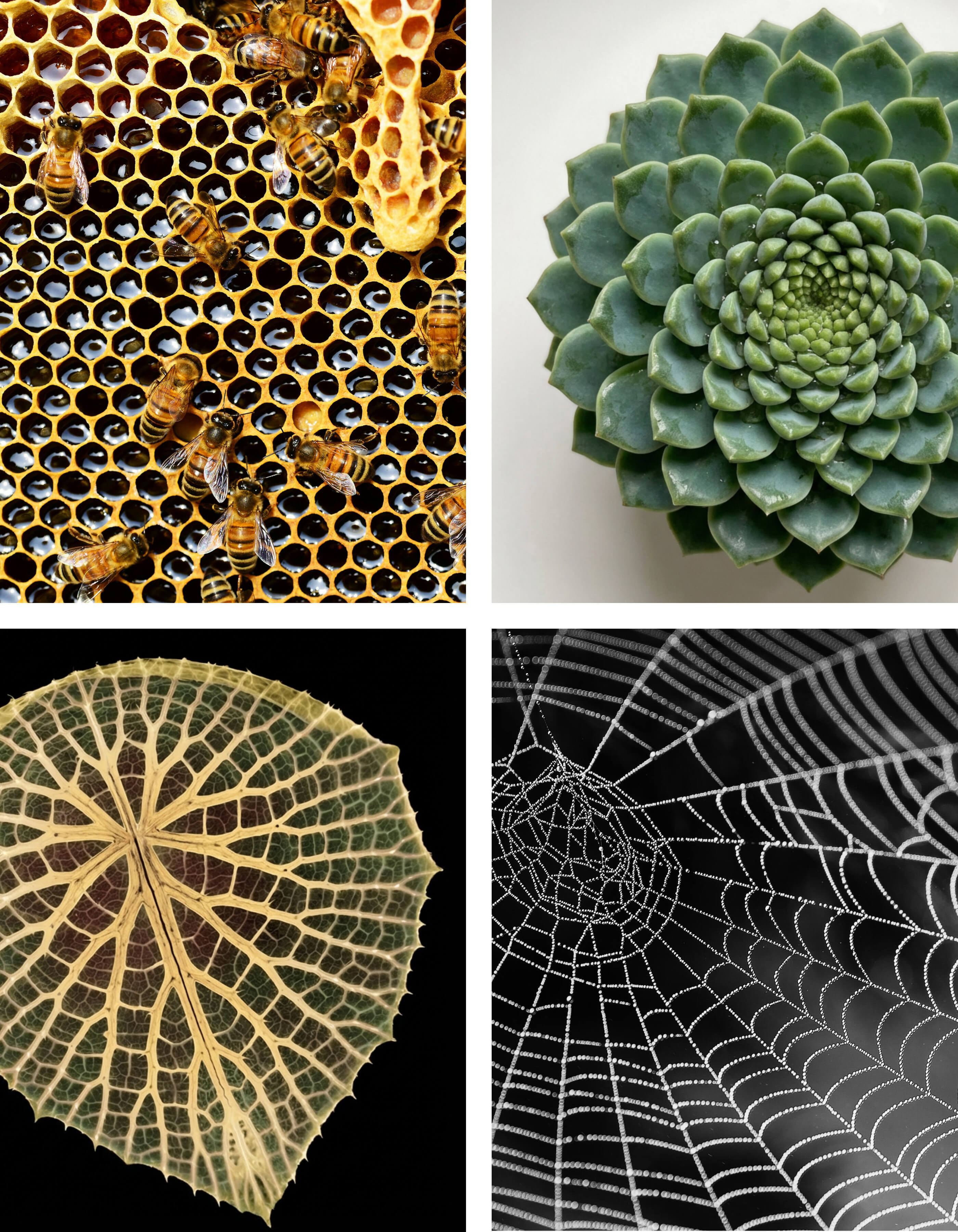
In nature there are structures that we still struggle to replicate on a larger man-made scale but instead take inspiration from. These are the kind of structures I think Gaudi studied for his work.
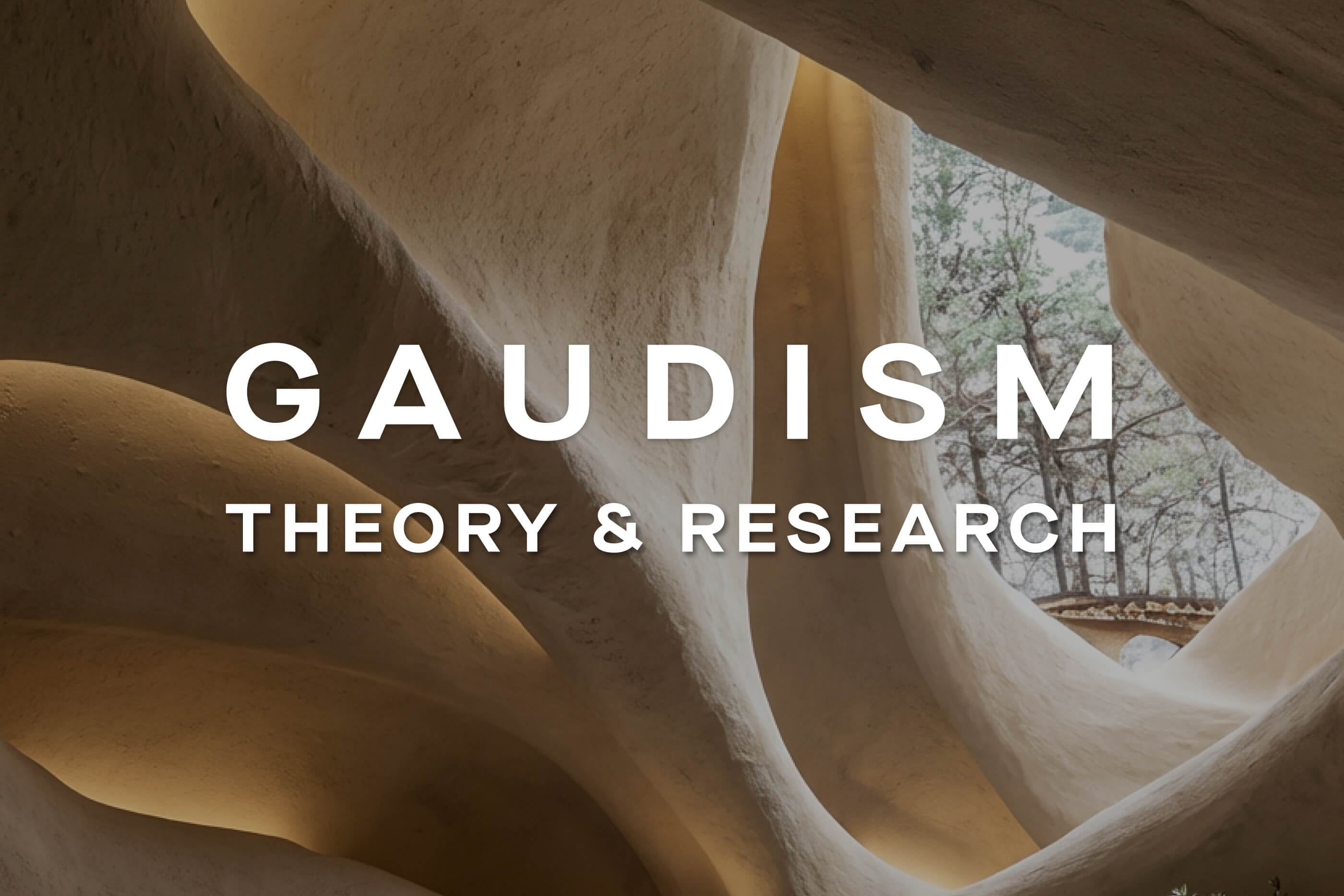
Using new artificial intelligence technology it caught my eye that people had started exploring Gaudism, the open minimalistic results look so fresh and freeing. Dismissive of the usual boundaries and regulations, these designs are simply stunning.
The one I have shown here looks as if it’s been carved into a sandstone cave.

Santorini Architecture
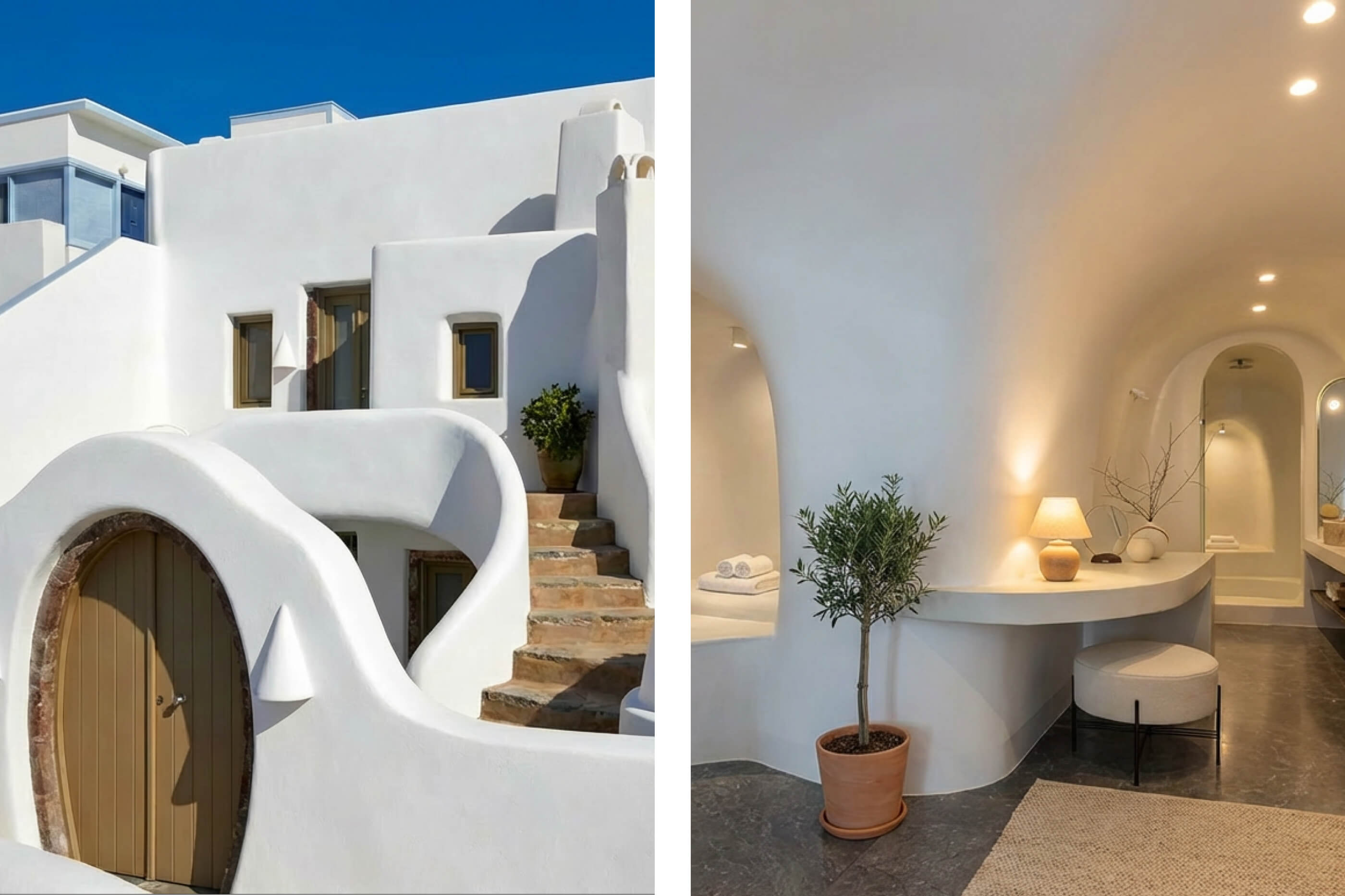
There have been places built that really correlate with the AI results, Santorini for example has a unique architecture style. The Perivolas hotel is a restoration of 300 year old caves using local stone, that were once home to local fishermen and farmers.
In Santorini the main materials for their buildings are volcanic dust, igneous rock and pumice stone. Construction of their famous domes and cave houses are cheap and easy, the results are amazing. These homes, developed from the natural structure of the landscape are idyllic.
They were actually built for the poorer of the village and are designed with regards to the sun, living space at the front for natural light, bedrooms at the back and kitchen in the middle to warm the place. There is something pleasing about the way the walls are bumpy yet smooth and the way the light bounces off as a result is artistic.
The similarities between Santorini Architecture and Gaudism are clear, they play with scale and curvature, they have evolved from natural organic forms, it is so interesting and challenges the way in which furniture and fixtures integrate. What makes them all the more impressive is that no two are in anyway the same, every one of them is formed with the gentle guidance of nature.

Bold, brave and minimalistic are words i’d choose to describe these spaces. Gaudi’s work was once described as ‘freedom of form, voluptuos colour and texture and organic untity’, they also corrilate well with Santorini Architecture.
It is so interesting to see throughout all of these images, the way that light is travels through, around and over the dynamic shapes. Reflecting on the ages of Santorini caves and how our ancestors many years ago would seek shelter in caves makes the modernistic AI results feels strangely familiar and comforting.
The idea of integrating our homes more within the natural forms of the landscape is appealing, today we all seek to aim for more eco-friendly homes and to live more as one with earth to reverse environmental damage done. Gaudism AI explores this in a more laterarry way and I really think its beautiful.

Article by Lucy Marsh