


Designing Through Immersion
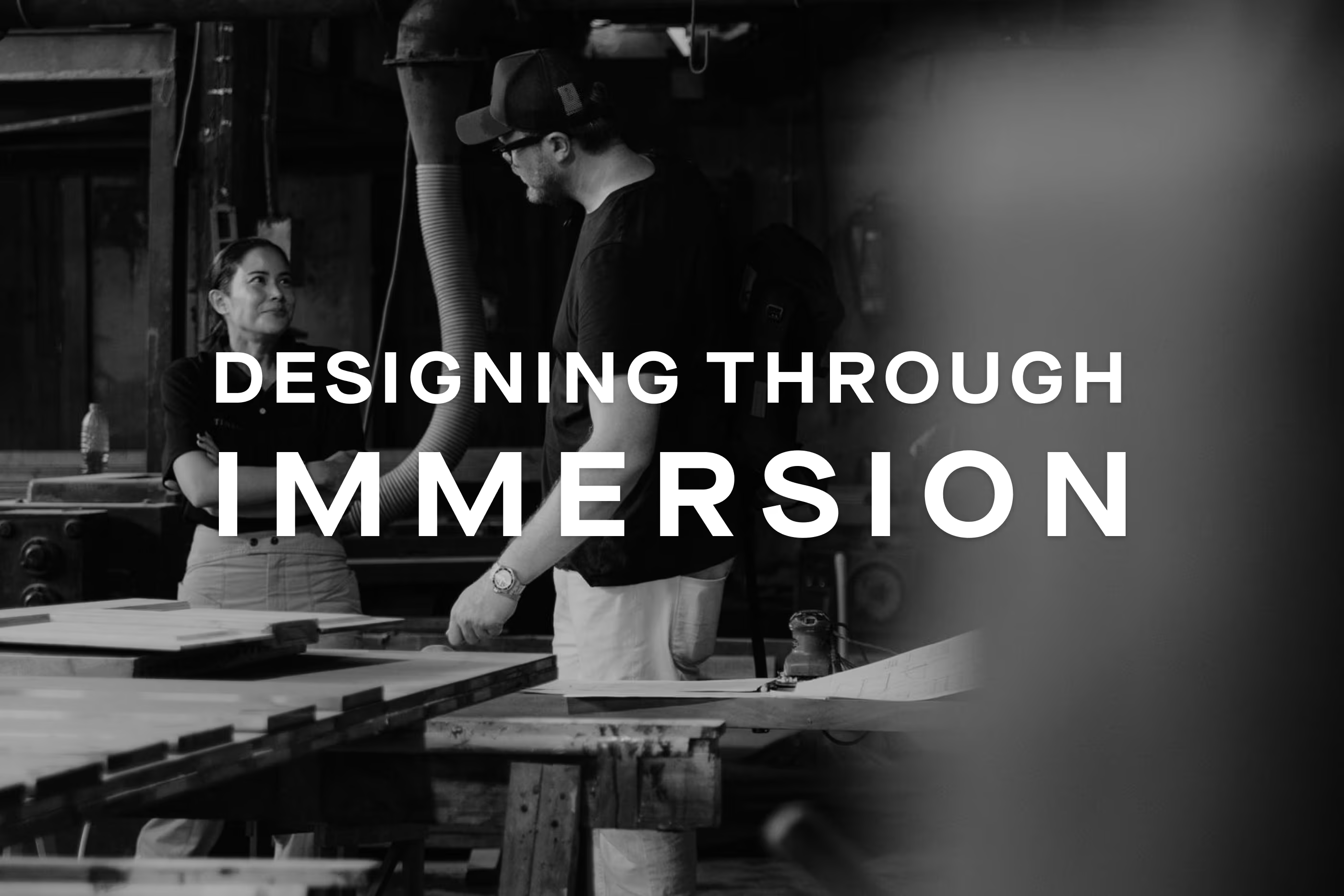
George Wolstenholme, on spending time in Thailand, getting lost in the research, and becoming familiar with a place before beginning to design.
The group have some wonderful projects coming up in and around Thailand. The specifics can't be delved into too much at the moment, but what we can discuss is the excuse it has given us to spend real time learning about the culture and the geography we will be designing in.
I spent much of May stepping back from the task list and disappearing into it: the School of Architecture at Bangkok University, the Thailand Creative & Design Centre, museums, galleries, workshops, places of interest and places of worship. Becoming familiar with a place before you start designing in it sets a depth of tone from the outset that is very difficult to replicate from the other side of the world.
Thailand has such an immediate and recognisable visual identity that it is tempting to think you already know something about it. The roofs, the temples, the colour, the ornament, the landscape. But the more time we have spent there, the more apparent it has become how much sits beneath that first impression.
So we have been trying to get a little further into the fibre of it.
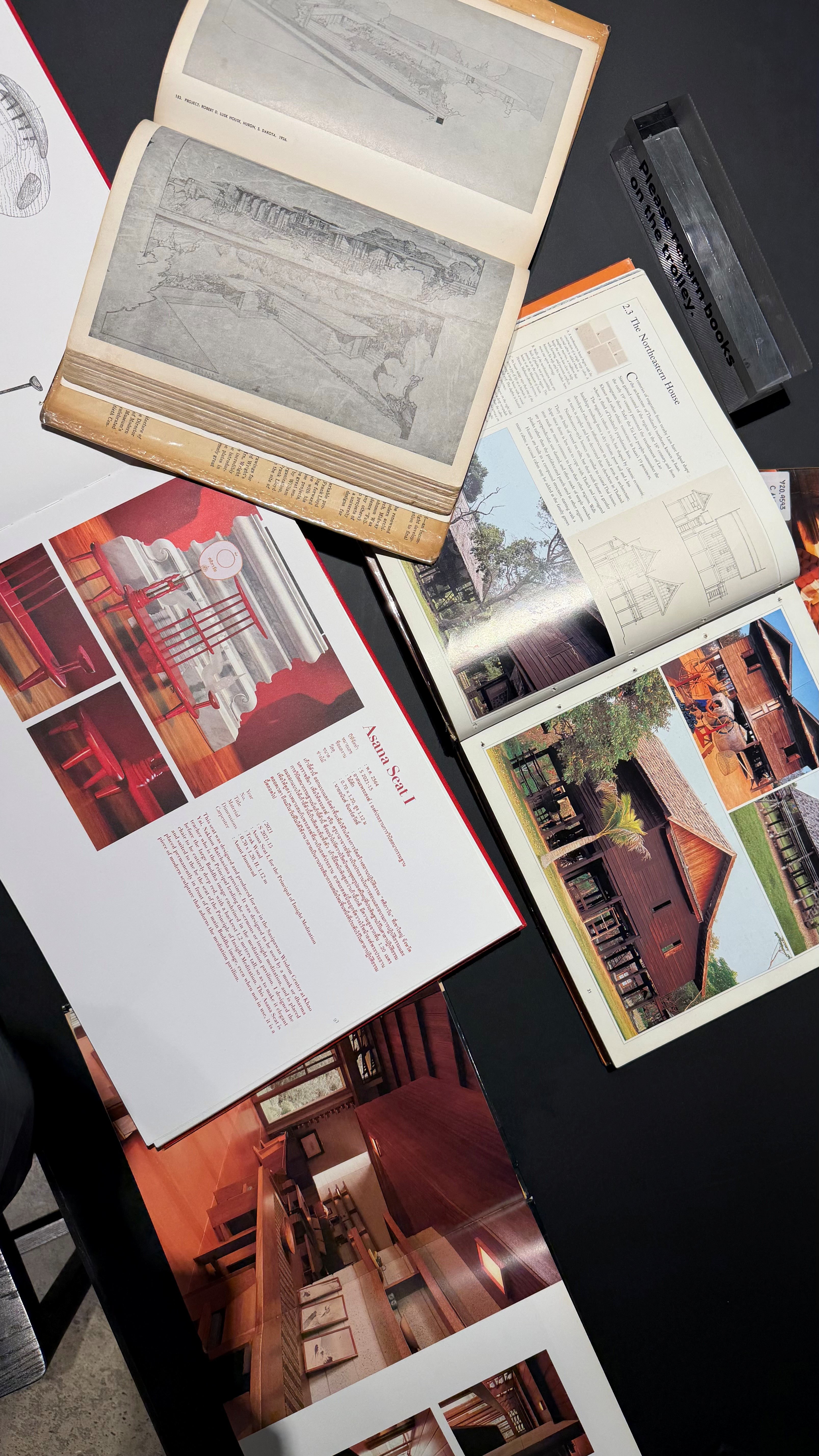
That has meant looking much more widely than interiors; architecture from rural houses and rice barns through to palaces and temples; furniture, lacquer, textiles, ceramics and metalwork; and, more than anything, the people still making these things today.
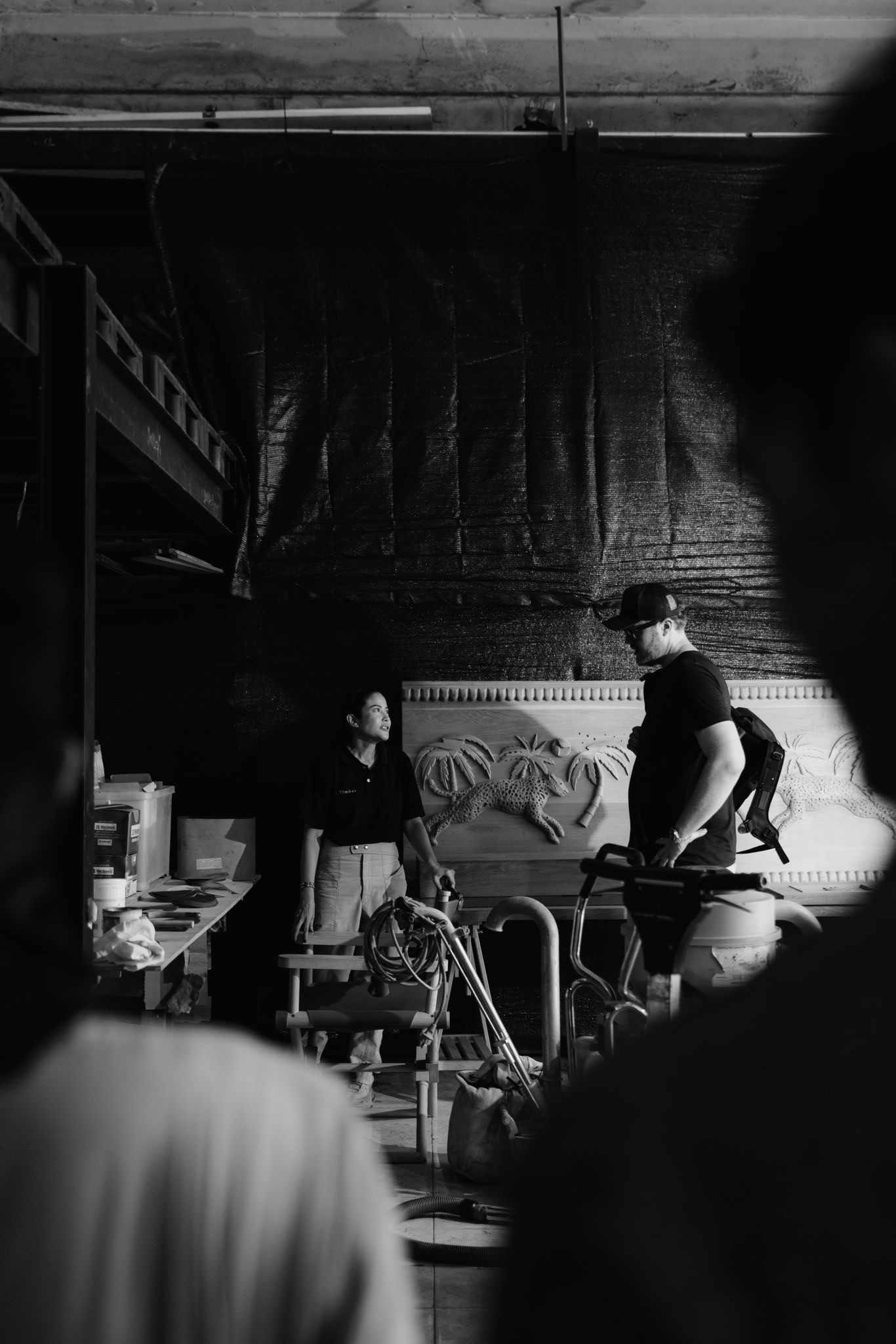
What has struck me most is how much of it simply cannot be got from a book or by delving into research on the internet. You may be able to get information, but what you take away from it is very different when you’re actually walking the course yourself.
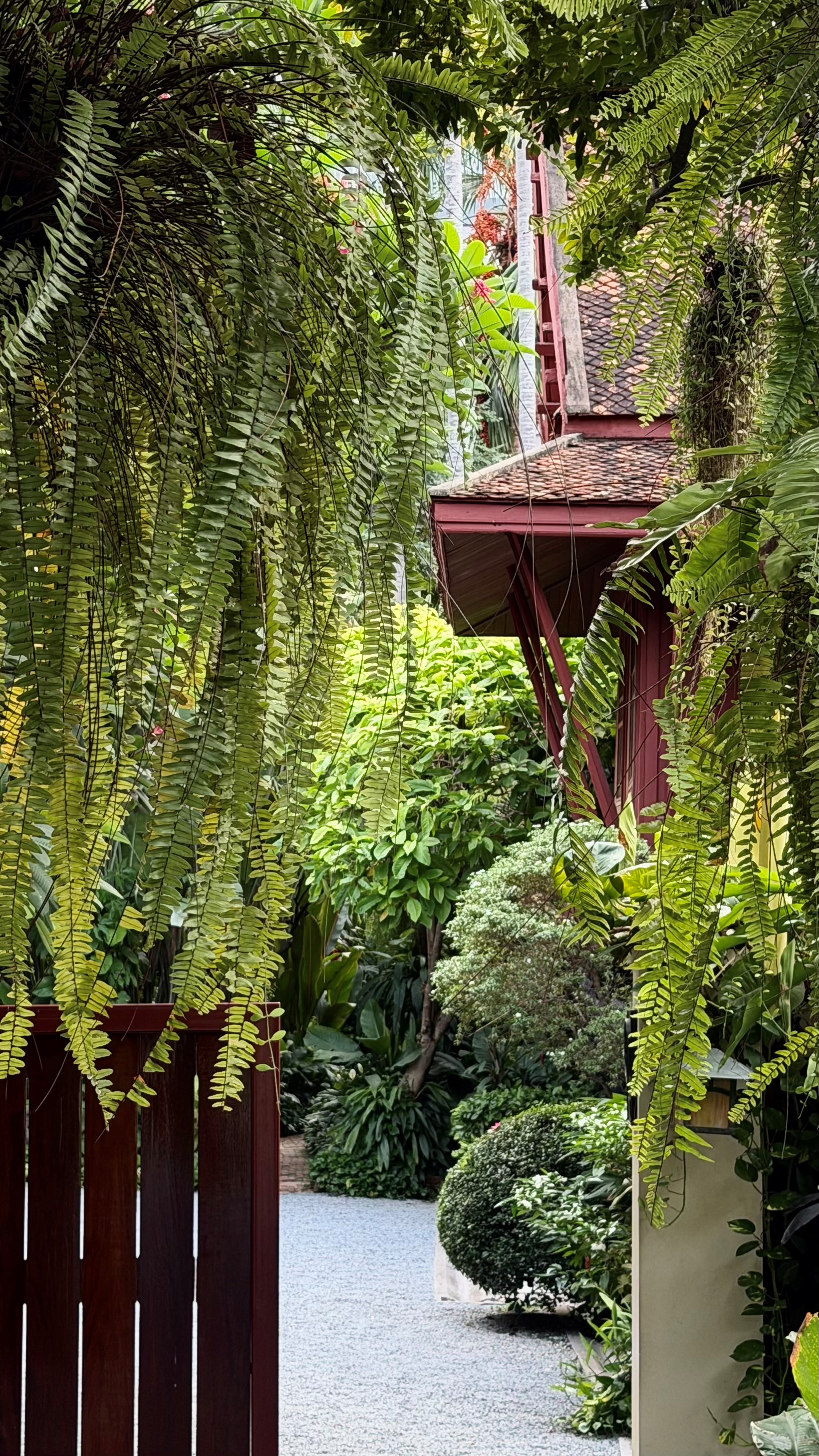
Jim Thompson's house appears on every list of things to see in Bangkok, and I had read about it long before I stood in it. None of that reading prepared me for the thing that actually stopped me: a piece where the mirror-glass mosaic had come away over the years and exposed the layered lacquer beneath, deep reds and ochres showing through the surface. It was more beautiful damaged than it would ever have been intact. No photograph tells you that; you have to move around it and watch it change.
It also made me think about light. So much of this work, the gilding, the lacquer, the mother-of-pearl, the mosaic, was made for the low, uneven, moving light of a building without electricity, and it behaves completely differently under it. Tanizaki wrote about this beautifully in the 1930s in relation to Japan, and it is just as true here. Seeing these things in that kind of light makes you realise how much is lost when they are evenly illuminated. The surface needs shadow as much as it needs light.
The other genuine turning point was an afternoon spent with a gallerist in Bangkok, being walked through the regional distinctions properly; what the north does with lacquer and carving, what the south does with metalwork, how the processes differ, and how they can be brought together in a single contemporary piece. That afternoon did more to organise my understanding of Thai craft than weeks of reading had managed. It is very hard to hold on to the idea of one uniform "Thai design" afterwards. There are several, they don't always agree with each other, and that turns out to be liberating rather than difficult.
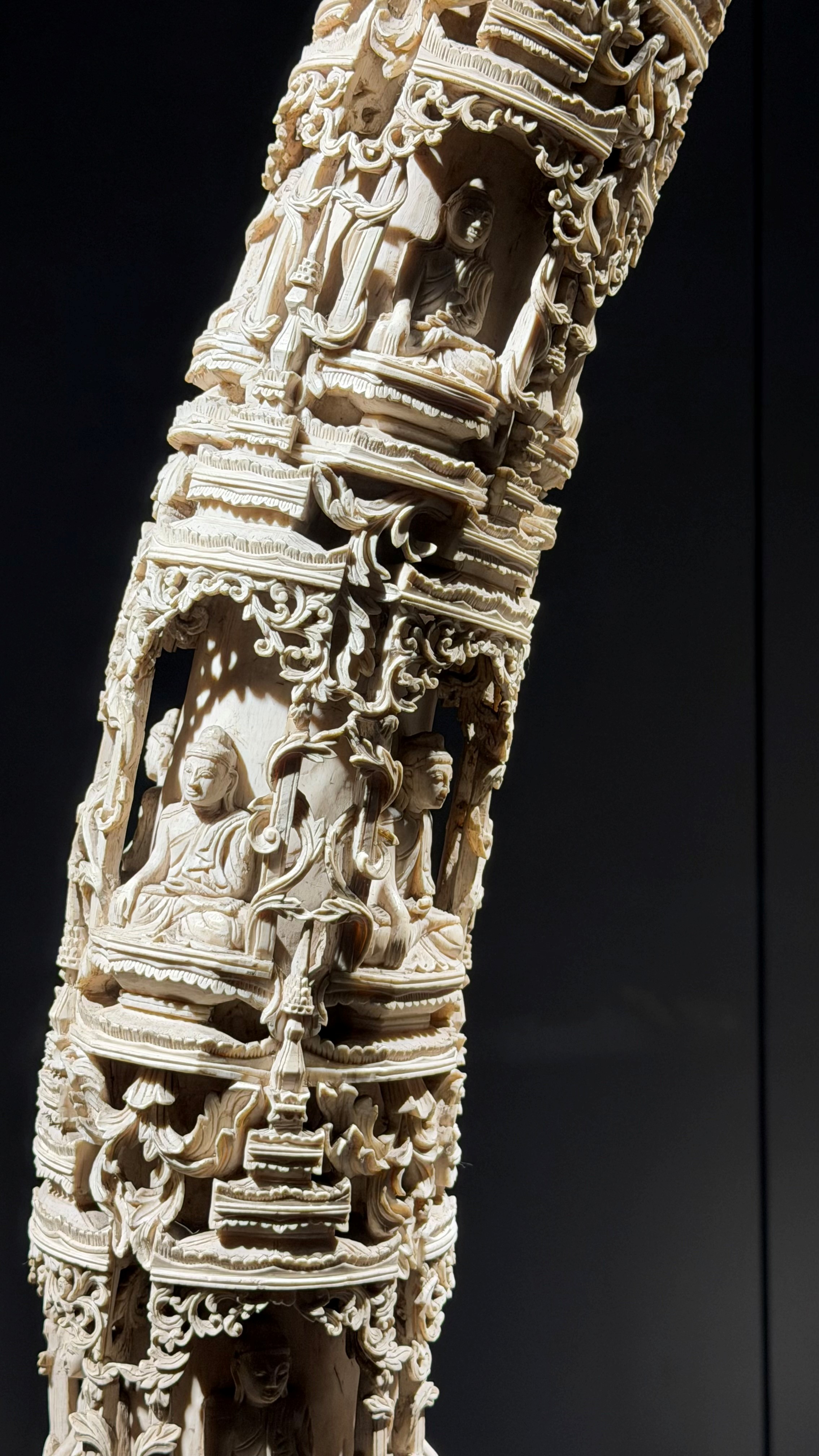
We were also fortunate to spend time studying royal collections of antiquity. The level of patience embodied in some of these objects is extraordinary: manuscript cabinets, instruments, ceremonial pieces, work in which every square inch has been considered by someone who was in no hurry at all. You come away with a slightly adjusted sense of what "well made" means.
Some of the most useful learning came in temple grounds, where Mai Dat stopped being an interesting footnote and became something I now can't stop looking for. It is the Thai tradition of training trees into a set of recognised forms, and I had lazily assumed it was a local relative of Japanese bonsai. It isn't. Bonsai aspires to a convincing miniature of nature; Mai Dat is closer to sculpture, composing a living thing as a gesture in space. There are very few good ones. They take decades, they sit in places that matter, and they are becoming genuinely scarce. We are told that where we visited was actually the last practicing location in Thailand.
There was a similar shift with the shadow puppets: large pieces of intricately pierced and painted leather, beautiful objects in daylight, and something else entirely when lit from behind. The physical object all but disappears and what survives is the pattern of light. Two things from one, if it is made properly. That is difficult not to become slightly obsessed with and is something that can act as inspiration far and away from the concept in its traditional form.
The architecture works the same way. Traditional Thai houses often had no ceiling at all, the roof structure left exposed to save weight and let air move. Walk into a palace or temple and you find the opposite: deep red, gilded, layered, painted. What initially looks like a decorative distinction begins to reveal a much richer hierarchy of status, ceremony and use. Now times have moved on and we are designing for UHNWI’s so we can’t exactly suggest no ceilings because, ‘that’s how they used to do it,’ but what you can do is take the concept and give the ceilings you do design more of a grounding in traditional concepts.
Just as valuable have been the conversations with people still doing this work; artists, craftspeople and manufacturers across textiles, lighting, furniture, sculpture and materials. Some are using techniques passed down for generations; others are taking those traditions somewhere entirely contemporary. You learn not just how something looks, but how it is made, what the material will and won't do, what is difficult, and what the maker would love to be asked to do if somebody would only ask. At that point, the process becomes as much about understanding people and making as it is about design. For us, there is something much more meaningful about working with that knowledge where it lives. Commissioning (where appropriate) within Thailand and involving the people who understand these traditions firsthand.
The nice thing about researching in this way is that one thing leads to another. You start by looking at a building and end up reading about roof construction. That leads to lacquer. Lacquer leads to an old cabinet. The cabinet leads to a craft tradition, which leads to an artist, which leads somewhere else entirely.
It has become a fairly large tapestry, and at this stage that is exactly what we want it to be. We are not trying to reduce Thailand to a neat set of references, or to decide too quickly what any of it should become. There is still a huge amount to discover, which is probably most of the enjoyment.
For now, we are letting all of it settle. Hopefully, when the projects do emerge, they will feel naturally connected to where they are; not because they are trying particularly hard to look Thai, but because Thailand was part of their development from the very beginning.